
Summary
Food safety remains one of the most significant public health challenges globally. Despite advances in food production, processing, and regulation, foodborne diseases continue to affect hundreds of millions of people annually. New estimates released by the World Health Organization (WHO) in June 2026 indicate that unsafe food causes approximately 866 million illnesses and 1.5 million deaths each year worldwide. The burden is exacerbated by climate change, antimicrobial resistance (AMR), increasingly complex supply chains, and emerging food technologies.
Recent weeks have witnessed multiple food recalls and outbreak investigations involving Listeria monocytogenes, Salmonella Enteritidis, and Clostridium botulinum. These events highlight persistent vulnerabilities in food systems despite decades of food safety progress. At the same time, innovations in genomic surveillance, artificial intelligence, predictive analytics, biosensors, and digital traceability are transforming how hazards are detected and controlled.
This article explores the current state of global food safety, examines recent outbreak investigations, discusses emerging scientific and technological solutions, and considers future directions for building more resilient food systems.
Introduction
Food safety is fundamental to public health, food security, economic development, and international trade. As food supply chains become increasingly globalized, contamination events can rapidly affect consumers across multiple countries.
The significance of food safety was highlighted during World Food Safety Day 2026, whose theme, “From Burden to Solutions,” emphasized the transition from recognizing foodborne disease burdens to implementing practical interventions. Recent WHO estimates demonstrate that foodborne illnesses remain a major global health challenge, particularly among vulnerable populations including children, pregnant women, older adults, and immunocompromised individuals.
At the same time, regulatory agencies worldwide are confronting emerging risks associated with antimicrobial resistance, climate change, and increasingly complex food supply chains.
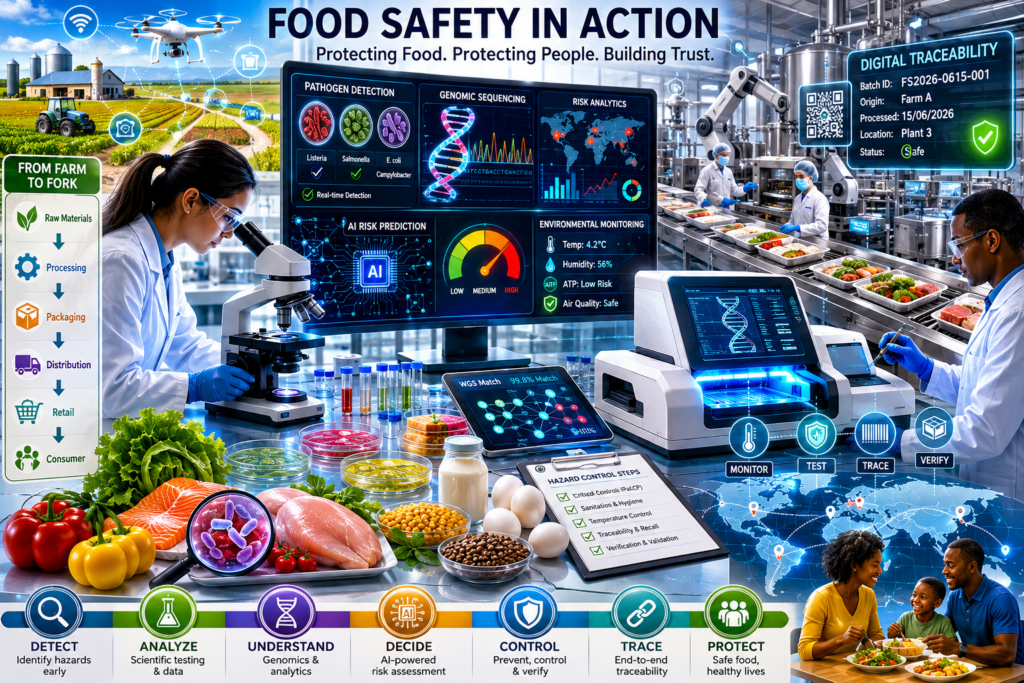
The Current Food Safety Landscape
Foodborne Disease Remains a Major Global Challenge
According to WHO estimates released in June 2026, unsafe food causes approximately 866 million illnesses and 1.5 million deaths annually worldwide. The report highlights that foodborne diseases continue to impose significant health and economic burdens globally. Climate change and antimicrobial resistance are increasingly contributing to food safety challenges by influencing pathogen survival, transmission, and treatment outcomes.
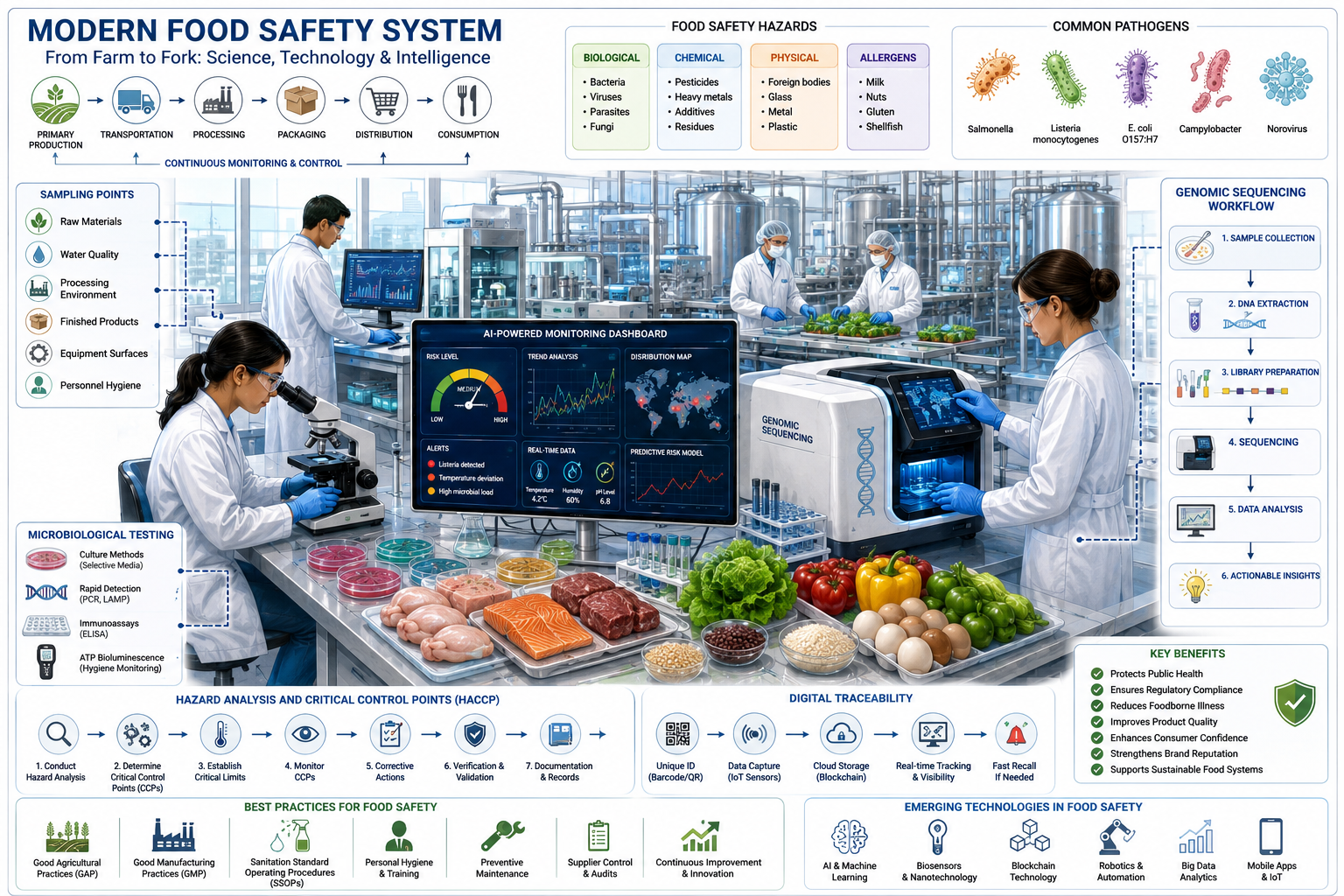
Foodborne hazards include:
- Bacterial pathogens
- Viruses
- Parasites
- Chemical contaminants
- Environmental pollutants
- Food allergens
Traditional food safety systems remain effective against many hazards, but emerging risks require more sophisticated surveillance and intervention strategies.
Recent Food Safety News and Outbreak Investigations
Listeria Outbreak Associated with Soft Cheeses
One of the most significant recent food safety incidents involves an ongoing multistate outbreak of Listeria monocytogenes linked to soft cheese products. Regulatory investigations led to expanded recalls of multiple cheese products after illnesses, hospitalizations, and a reported death were linked to contaminated products. Public health authorities advised consumers not to consume affected cheeses while traceback investigations continue.
Why Listeria Matters
Listeria monocytogenes is particularly concerning because:
- It survives refrigeration temperatures.
- It can persist in food processing environments.
- It causes severe illness among vulnerable populations.
- Mortality rates are higher than many other foodborne pathogens.
The outbreak demonstrates the continuing challenge of controlling environmental pathogens in dairy processing facilities.
Emerging Salmonella Investigations
In June 2026, FDA investigators reported ongoing investigations into new Salmonella outbreaks, including one involving Salmonella Enteritidis with dozens of confirmed illnesses. Source identification and traceback activities remain underway.
Additionally, recalls involving products containing potentially contaminated ingredients have highlighted vulnerabilities associated with complex supply chains and ingredient sourcing.
Clostridium botulinum and Infant Formula Concerns
Recent recalls involving powdered infant formula due to potential Clostridium botulinum contamination have attracted considerable attention. Infant botulism remains one of the most severe foodborne conditions because the toxin can cause paralysis and life-threatening illness.
Antimicrobial Resistance: The Silent Food Safety Threat
What Is Antimicrobial Resistance?
Antimicrobial resistance occurs when microorganisms evolve mechanisms that allow them to survive exposure to antimicrobial agents.
AMR is increasingly recognized as a food safety issue because resistant bacteria can enter the food chain through:
- Livestock production
- Aquaculture
- Environmental contamination
- Food processing environments
Recent European monitoring reports continue to identify antimicrobial resistance in foodborne pathogens including Salmonella and Campylobacter. Public health authorities consider AMR among the most significant emerging food safety threats.
Food Chain Implications
The presence of antimicrobial-resistant bacteria in foods can:
- Reduce treatment effectiveness.
- Increase disease severity.
- Extend illness duration.
- Increase healthcare costs.
As a result, food safety systems increasingly incorporate AMR surveillance alongside traditional microbiological testing.
The Rise of Smart Food Safety
Genomic Surveillance
Whole Genome Sequencing (WGS) has transformed outbreak investigations.
Modern laboratories can:
- Identify pathogens rapidly.
- Determine genetic relationships among isolates.
- Trace contamination sources more effectively.
- Detect outbreaks earlier.
Recent Listeria investigations have relied heavily on genomic matching between clinical and food isolates.
Artificial Intelligence and Predictive Food Safety
Food safety is increasingly becoming predictive rather than reactive.
Emerging AI applications include:
- HACCP monitoring
- Risk prediction
- Supply chain analytics
- Environmental monitoring
- Recall management
These systems can identify anomalies before contamination events escalate into outbreaks.
Advanced Biosensors
Recent reviews highlight advances in biosensor technologies capable of detecting:
- Pathogens
- Allergens
- Chemical contaminants
- Spoilage indicators
Modern sensors provide faster and more sensitive detection than many conventional laboratory methods.
Food Traceability: A New Era
Digital Traceability Systems
The FDA’s Food Traceability Rule has accelerated adoption of digital tracking systems throughout supply chains.
Traceability systems improve the ability to:
- Identify contamination sources.
- Remove unsafe products quickly.
- Reduce outbreak duration.
- Improve consumer confidence.
Researchers note that while enhanced traceability offers substantial public health benefits, implementation challenges remain for smaller producers due to costs and data management requirements.
Digital Food Supply Chains
Future traceability systems may integrate:
- Blockchain technologies
- Internet of Things (IoT) sensors
- Cloud databases
- Real-time monitoring systems
Such technologies can provide near real-time visibility across food supply networks.
Challenges Facing Future Food Safety Systems
Several challenges remain:
Climate Change
Climate change influences:
- Pathogen survival
- Mycotoxin production
- Water quality
- Agricultural practices
These changes may increase contamination risks in many regions.
Globalized Supply Chains
Foods increasingly cross multiple international borders before consumption, increasing complexity and requiring stronger international coordination.
Emerging Hazards
Food safety professionals must also address:
- Novel foods
- PFAS contamination
- Microplastics
- Nanomaterials
- New pathogen strains
Emerging hazards require continuous scientific research and adaptive regulatory frameworks.
Research Spotlight
Smart Technologies in Food Safety and Quality Monitoring
Reference
Smart Technologies in Food Safety and Quality Monitoring: Recent Advances and Future Perspectives.
Available at:
https://onlinelibrary.wiley.com/doi/10.1111/jfpe.70367
Key Findings
The review highlights how emerging technologies including biosensors, artificial intelligence, machine vision, and digital monitoring systems are strengthening food safety management. These tools facilitate faster hazard detection, real-time monitoring, and improved decision-making throughout food supply chains.
Practical Implications
Food companies adopting smart monitoring systems may improve:
- Hazard detection speed
- Product quality assurance
- Regulatory compliance
- Consumer protection
Future Directions
Food safety is transitioning from reactive interventions toward predictive and preventive systems.
Future priorities include:
- Expanded genomic surveillance
- Integration of AI-driven monitoring
- Enhanced traceability systems
- Stronger AMR control strategies
- Climate-resilient food safety programs
- Improved global data sharing
The most successful food safety systems will combine scientific innovation, regulatory oversight, industry engagement, and consumer awareness.
Conclusion
The global food safety landscape is undergoing rapid transformation. Recent outbreaks involving Listeria, Salmonella, and Clostridium botulinum demonstrate that foodborne hazards remain persistent threats. Simultaneously, advances in genomic surveillance, artificial intelligence, biosensors, and digital traceability are creating unprecedented opportunities for prevention and control.
The challenge for food scientists, regulators, industry professionals, and policymakers is to translate scientific knowledge into practical solutions that reduce the burden of foodborne disease. As World Food Safety Day 2026 emphasized, the future lies not merely in understanding risks but in implementing solutions that ensure safe food for all.
References and Further Reading
- World Health Organization (2026). Unsafe food causes 866 million illnesses and 1.5 million deaths annually.
https://www.who.int/news/item/04-06-2026-unsafe-food-causes-866-million-illnesses-and-1.5-million-deaths-annually–young-children-at-highest-risk - FDA. Outbreak Investigation of Listeria monocytogenes: Soft Cheese (June 2026).
https://www.fda.gov/food/outbreaks-foodborne-illness/outbreak-investigation-listeria-monocytogenes-soft-cheese-june-2026 - CDC. Investigation Update: Listeria Outbreak, June 2026.
https://www.cdc.gov/listeria/outbreaks/soft-cheese-06-26/investigation.html - Food Safety News. FDA Investigating New Salmonella Outbreak.
https://www.foodsafetynews.com/2026/06/fda-investigating-new-salmonella-outbreak-3/ - EFSA. Antimicrobial resistance in foodborne bacteria remains a public health concern in Europe.
https://www.efsa.europa.eu/en/news/antimicrobial-resistance-foodborne-bacteria-remains-public-health-concern-europe - Wiley Journal of Food Process Engineering.
Smart Technologies in Food Safety and Quality Monitoring.
https://onlinelibrary.wiley.com/doi/10.1111/jfpe.70367 - FAO/WHO Codex Alimentarius. World Food Safety Day 2026.
https://www.fao.org/fao-who-codexalimentarius/world-food-safety-day/wfsd-news/en/ - Foods (2022). Antimicrobial Resistance in the Food Chain.
https://www.mdpi.com/2304-8158/11/19/2966