
Summary
Global seafood consumption has more than doubled over the past five decades, placing unprecedented pressure on marine ecosystems. Overfishing, climate change, habitat degradation, illegal fishing, and pollution threaten the long-term sustainability of many commercially important fish species. At the same time, consumers are increasingly seeking nutritious, environmentally responsible, and safe sources of protein.
Cell-cultivated seafood—also known as lab-grown or cultured seafood—is emerging as one of the most promising innovations in food biotechnology. Rather than harvesting fish from oceans or raising them in aquaculture systems, cultivated seafood is produced by growing authentic fish cells under carefully controlled conditions. The result is genuine seafood composed of the same types of muscle and fat cells found in conventional fish, without the need to catch or farm whole animals.
Scientists believe this technology could help reduce pressure on wild fish stocks, lower exposure to contaminants such as mercury and microplastics, and create more resilient food systems. However, challenges remain, including production costs, large-scale manufacturing, consumer acceptance, and regulatory oversight.
This article explores the science behind cultivated seafood, its potential benefits and limitations, current research, and what the future may hold for this rapidly evolving sector.
Introduction
Seafood is an important source of high-quality protein, omega-3 fatty acids, vitamins, and minerals for billions of people worldwide. However, global demand continues to rise while many marine resources face increasing environmental stress.
According to international fisheries assessments, a significant proportion of global fish stocks are either fully exploited or overexploited. Climate change is altering ocean temperatures, affecting fish migration patterns and ecosystem health, while marine pollution introduces contaminants into aquatic food chains.
These challenges have encouraged researchers to develop innovative approaches to seafood production. One of the most promising is cultivated seafood, produced using advances in cellular agriculture and tissue engineering.
What Is Cell-Cultivated Seafood?
Cultivated seafood is genuine fish or shellfish tissue produced by growing animal cells outside the body under sterile laboratory and manufacturing conditions.
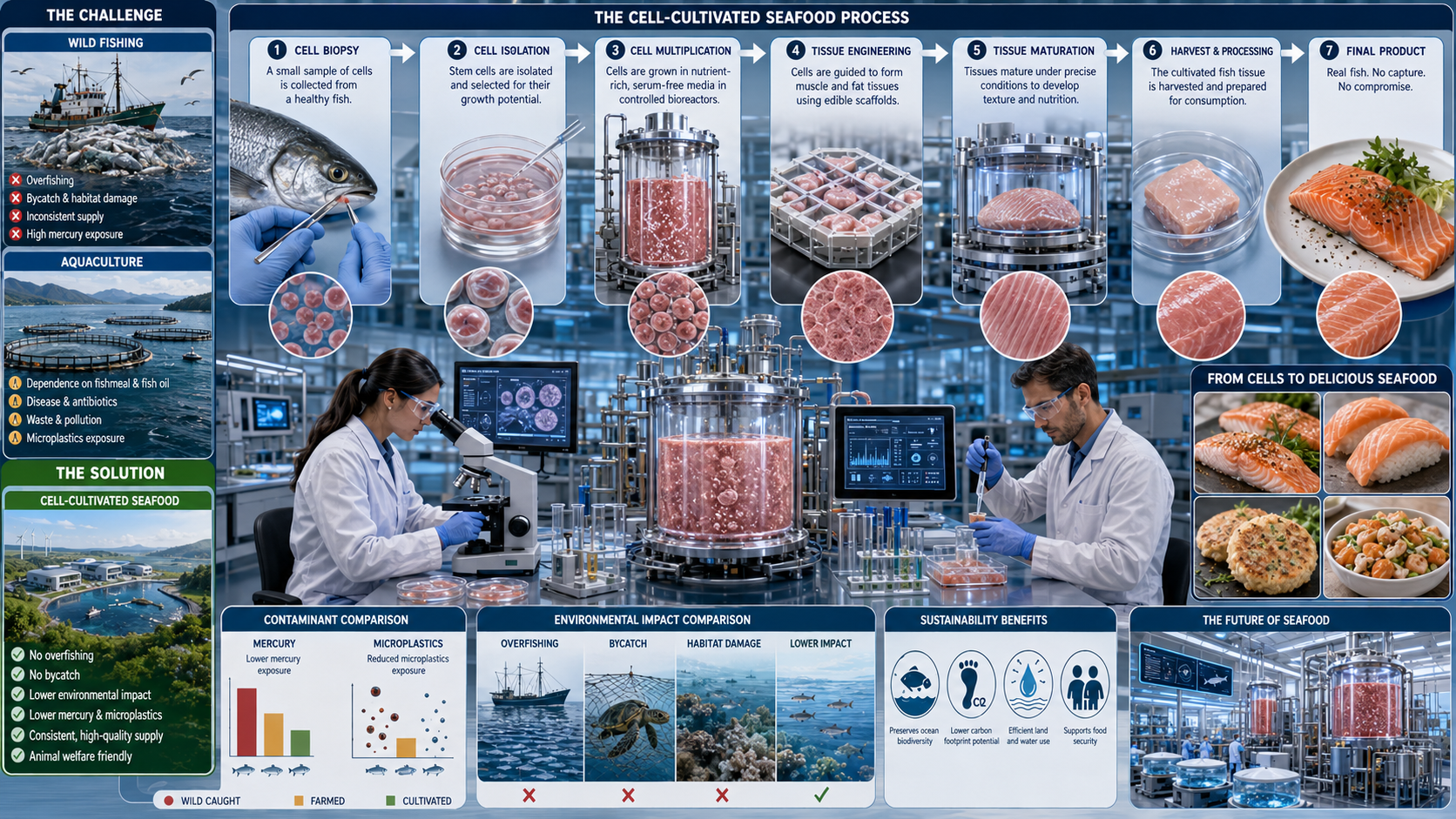
The production process typically includes:
- Collection of a small sample of healthy fish cells
- Selection of cells capable of continuous growth
- Growth in nutrient-rich culture media
- Cell multiplication in bioreactors
- Formation of muscle and fat tissues
- Harvesting and processing into food products
Unlike plant-based seafood alternatives, cultivated seafood contains authentic fish cells rather than ingredients designed to mimic seafood.
How Is Cultivated Fish Produced?
Step 1: Cell Collection
Scientists obtain a small biopsy from a healthy fish without significantly harming the animal.
Stem cells or muscle precursor cells are isolated for cultivation.
Step 2: Cell Growth
Cells are placed in sterile bioreactors containing nutrients such as:
- Amino acids
- Vitamins
- Sugars
- Minerals
- Growth factors
These nutrients allow cells to divide and multiply.
Step 3: Tissue Formation
Cells are encouraged to organize into three-dimensional structures using edible scaffolds or other tissue engineering techniques.
Researchers carefully control temperature, oxygen, and nutrient delivery throughout the process.
Step 4: Harvesting
Once sufficient tissue has formed, it is harvested and processed into seafood products such as fish fillets, fish cakes, or minced seafood.
Potential Benefits
Protecting Wild Fish Stocks
Reducing dependence on commercial fishing may help conserve vulnerable marine species and improve biodiversity.
Improved Food Safety
Cultivated seafood could reduce exposure to:
- Mercury
- Persistent environmental pollutants
- Microplastics
- Some parasites associated with wild seafood
Strict manufacturing controls may also reduce microbial contamination risks.
Environmental Sustainability
Potential environmental advantages include:
- Reduced overfishing
- Lower habitat destruction
- Less bycatch
- Reduced pressure on coral reef ecosystems
- More efficient land use
The overall environmental impact will depend on future production methods and energy sources.
Consistent Product Quality
Controlled production environments allow manufacturers to standardize nutritional composition, texture, and quality throughout the year.
Challenges Facing Cultivated Seafood
Production Costs
Although costs have declined significantly, commercial-scale production remains expensive.
Major contributors include:
- Cell culture media
- Growth factors
- Bioreactor infrastructure
- Energy consumption
Scaling Up
Producing cultivated seafood for global markets requires large bioreactors capable of maintaining consistent cell growth while ensuring food safety.
Scaling remains one of the industry’s biggest technical hurdles.
Consumer Acceptance
Some consumers remain uncertain about foods produced using cellular agriculture.
Public education and transparent communication will play important roles in building confidence.
Regulatory Oversight
Cultivated seafood must undergo rigorous safety assessments before entering the marketplace.
Regulators evaluate:
- Manufacturing processes
- Product composition
- Food safety
- Labeling
- Nutritional characteristics
Nutrition
Because cultivated seafood consists of genuine fish cells, its nutritional profile may closely resemble conventional seafood.
Researchers are also exploring methods to optimize nutritional value by adjusting levels of:
- Omega-3 fatty acids
- Vitamin D
- Essential amino acids
- Beneficial lipids
Future products may be designed to deliver targeted nutritional benefits.
Food Safety Considerations
Production occurs in carefully controlled environments that minimize exposure to environmental contaminants.
Nevertheless, manufacturers must implement comprehensive food safety systems including:
- Good Manufacturing Practices (GMP)
- Hazard Analysis and Critical Control Point (HACCP)
- Environmental monitoring
- Microbiological testing
- Traceability systems
Regulatory oversight remains essential to ensure consumer safety.
Environmental Considerations
Life-cycle assessments suggest cultivated seafood has the potential to reduce several environmental pressures associated with conventional seafood production.
Potential benefits include:
- Lower pressure on marine ecosystems
- Reduced overfishing
- Less habitat destruction
- Lower antibiotic use compared with some aquaculture systems
However, environmental performance will depend heavily on energy efficiency and manufacturing technologies.
Research Spotlight
Recent scientific reviews conclude that cultivated seafood could become an important component of future sustainable food systems.
Researchers emphasize that continued innovation is needed in:
- Cell line development
- Serum-free culture media
- Bioreactor design
- Tissue engineering
- Cost reduction
As these technologies mature, cultivated seafood may become increasingly competitive with conventional products.
Future Outlook
Several trends are expected to shape the future of cultivated seafood:
- Improved large-scale bioreactors
- Lower production costs
- Enhanced texture and flavor
- Expanded product variety
- Increased regulatory approvals
- Greater consumer awareness
Scientists also envision hybrid products that combine cultivated seafood with plant-based ingredients to improve affordability and sustainability.
Conclusion
Cultivated seafood represents one of the most exciting developments in modern food science. By producing genuine fish tissue without harvesting wild populations, this technology offers opportunities to improve food security, reduce environmental impacts, and strengthen the resilience of global seafood systems.
While challenges related to cost, scale, regulation, and public acceptance remain, ongoing advances in cellular agriculture continue to move cultivated seafood closer to commercial reality. As research progresses, this innovative approach may become an important complement to sustainable fisheries and responsible aquaculture, helping meet the nutritional needs of a growing global population while protecting marine ecosystems.
Key Takeaways
- Cultivated seafood is produced by growing authentic fish cells rather than catching wild fish.
- The technology may reduce pressure on overfished marine ecosystems.
- Controlled production environments can reduce exposure to contaminants such as mercury and microplastics.
- Large-scale production and affordability remain significant challenges.
- Continued scientific innovation and regulatory oversight will determine how widely cultivated seafood is adopted.
References
- Food and Agriculture Organization (FAO). The State of World Fisheries and Aquaculture.
- World Health Organization (WHO). Food Safety.
- Nature Food. Recent advances in cultivated meat and seafood research.
- Trends in Food Science & Technology. Cellular agriculture and cultivated seafood.
- Frontiers in Sustainable Food Systems. Cultivated seafood technologies and sustainability.
- Journal of Food Engineering. Bioprocess engineering for cultivated proteins.
- Comprehensive Reviews in Food Science and Food Safety. Cell-cultured food technologies.
- Annual Review of Food Science and Technology. Future directions in alternative protein production.