
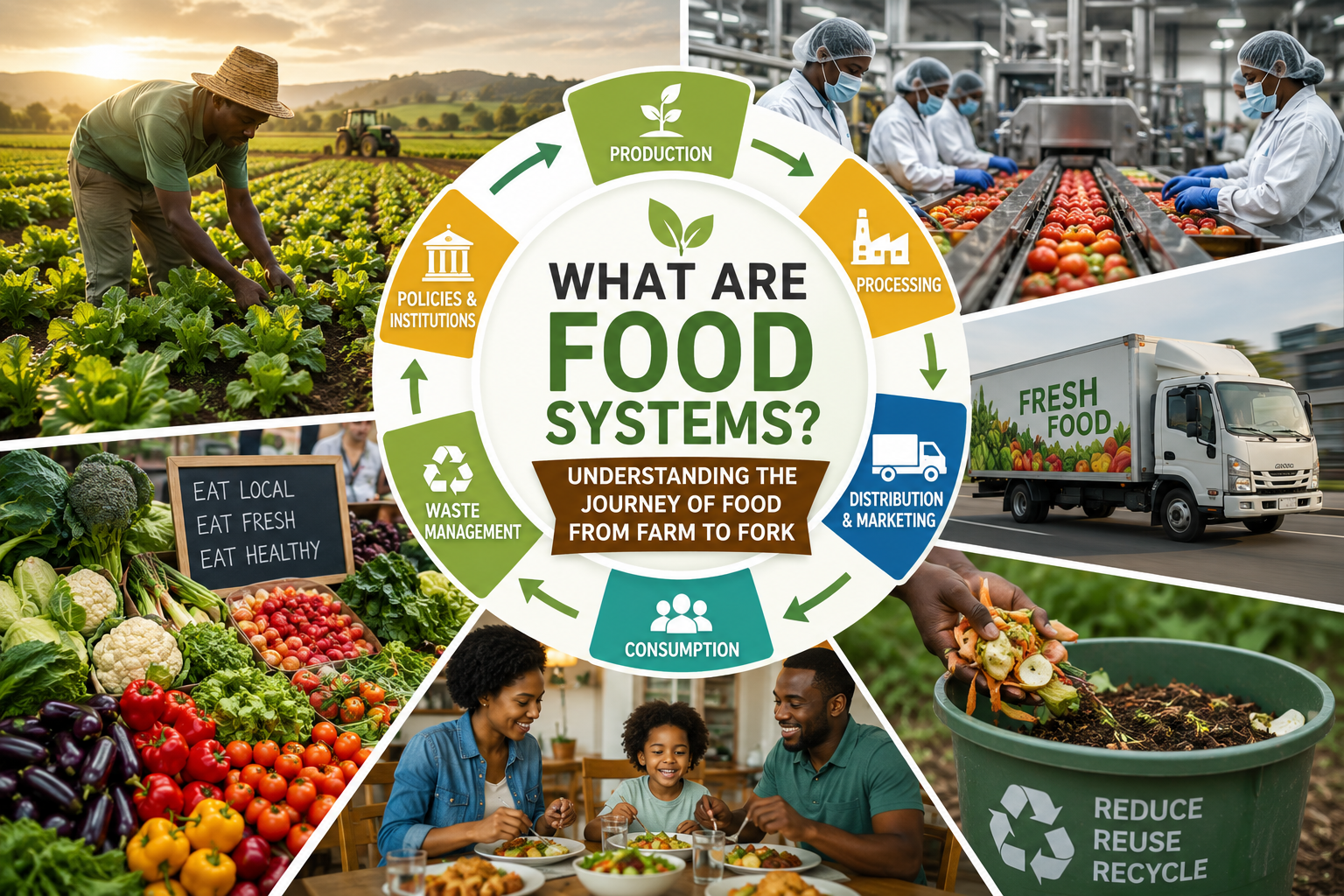
Imagine biting into a slice of bread. It looks simple enough—but have you ever wondered how many people, processes, and resources were involved before that bread reached your plate?
The wheat had to be grown, harvested, transported, milled into flour, baked, packaged, distributed, sold, and finally prepared for consumption. Behind every meal lies a complex web of activities known as the food system.
Understanding food systems is essential because they influence not only what we eat but also our health, livelihoods, economies, and the environment. Whether you’re a farmer, food processor, policymaker, researcher, student, or consumer, you are part of the global food system.
What Is a Food System?
A food system is the entire network of people, resources, activities, and institutions involved in producing, processing, distributing, selling, consuming, and disposing of food.
In simple terms:
A food system is everything that happens to food from the moment it is produced until what remains after we finish eating it.
It is often described as the journey of food “from farm to fork—and beyond.”
Why Food Systems Matter
Food systems affect nearly every aspect of our lives.
A healthy food system should:
- Provide safe and nutritious food
- Support farmers and food businesses
- Create employment opportunities
- Protect natural resources
- Reduce food waste
- Improve public health
- Strengthen national food security
When food systems fail, communities experience hunger, malnutrition, foodborne diseases, environmental degradation, and economic losses.
The Six Main Components of a Food System
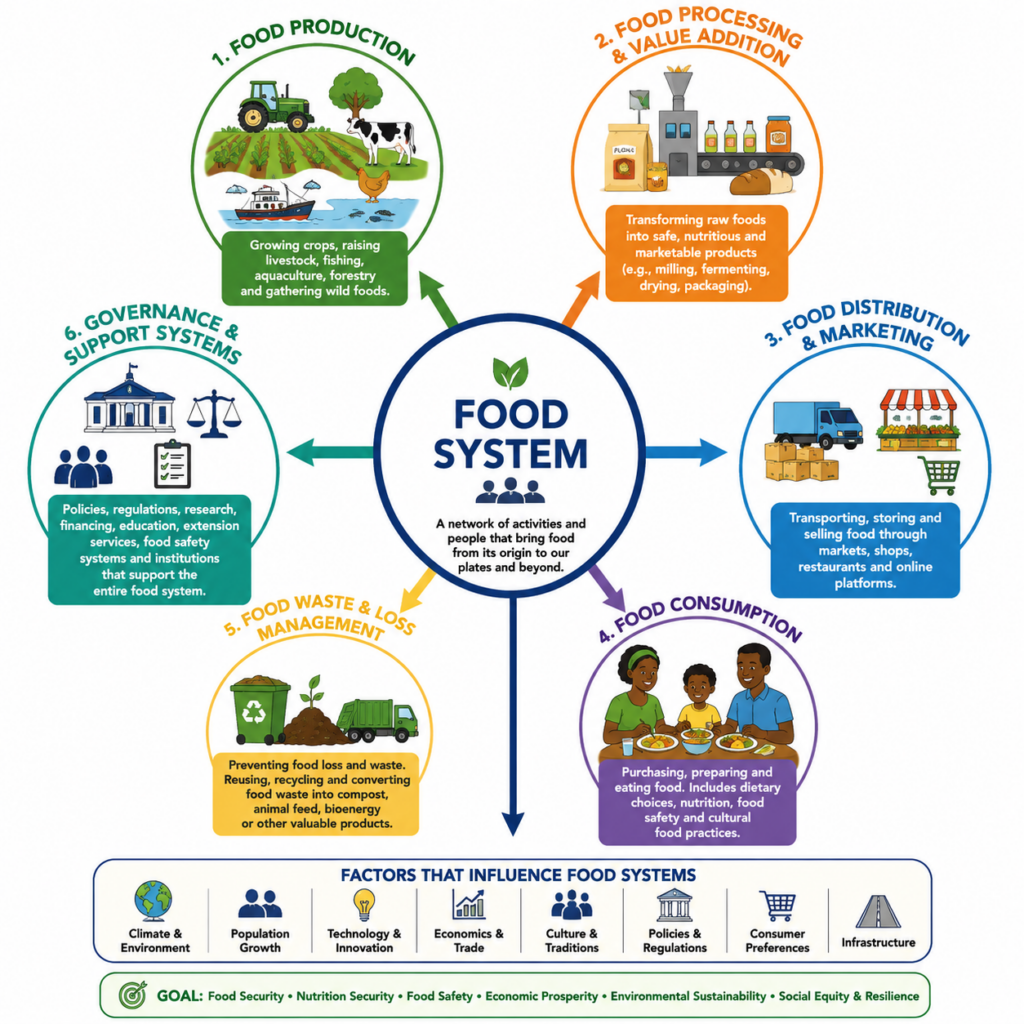
1. Food Production
Everything begins with producing food.
This includes:
- Growing crops
- Raising livestock
- Fishing
- Aquaculture
- Forestry
- Gathering wild foods
Farmers rely on resources such as:
- Land
- Water
- Seeds
- Fertilizers
- Animal feeds
- Machinery
- Labour
- Climate
Without production, there is no food system.
Example:
A maize farmer in Kenya prepares the land, plants improved seed, manages weeds and pests, harvests mature maize, and dries the grain before storage.
2. Food Processing and Value Addition
Most foods are processed before reaching consumers.
Processing makes food:
- Safer
- More nutritious
- Easier to prepare
- Longer lasting
- More attractive
Examples include:
- Milling maize into flour
- Fermenting milk into yogurt
- Drying fruits
- Making bread from wheat flour
- Producing cheese
- Canning vegetables
- Packaging beverages
Value addition also increases farmers’ income and reduces post-harvest losses.
3. Food Distribution and Marketing
Food must move from producers to consumers.
This involves:
- Transportation
- Storage
- Cold chain systems
- Wholesale markets
- Retail shops
- Supermarkets
- Restaurants
- Export and import
Good distribution systems reduce spoilage and ensure food reaches people when and where it is needed.
4. Food Consumption
Consumers are central to every food system.
Consumption includes:
- Purchasing food
- Preparing meals
- Eating habits
- Dietary choices
- Nutrition
- Food safety
- Cultural food traditions
Our choices influence what farmers grow and what food companies produce.
When consumers demand healthier foods, industries respond by developing healthier products.
5. Food Waste and Loss Management
Not all food produced is eaten.
Food can be lost during:
- Harvesting
- Storage
- Transportation
- Processing
Food may also be wasted by retailers, restaurants, or households.
Globally, approximately one-third of food produced for human consumption is lost or wasted each year.
Reducing food waste helps conserve:
- Water
- Energy
- Land
- Labour
- Money
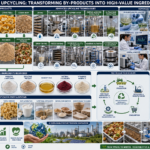
Many food systems are now embracing the circular economy, where food waste is converted into compost, animal feed, bioenergy, or valuable industrial products.
6. Governance and Support Systems
Food systems do not operate in isolation.
They depend on:
- Government policies
- Research institutions
- Universities
- Extension services
- Financial institutions
- Food safety authorities
- International organizations
- Consumer protection agencies
These institutions establish standards, regulations, and policies that ensure food is safe, affordable, and accessible.
What Influences Food Systems?
Many factors shape how food systems function.
Climate Change
Rising temperatures, droughts, floods, and changing rainfall patterns affect crop yields and livestock production.
Population Growth
More people require more food.
By 2050, the world’s population is expected to approach 10 billion people, placing greater pressure on food production.
Technology
Innovations such as:
- Precision agriculture
- Artificial intelligence
- Biotechnology
- Improved seed varieties
- Smart irrigation
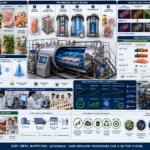
- Food preservation technologies
are transforming modern food systems.
Consumer Preferences
People increasingly seek foods that are:
- Healthier
- Convenient
- Organic
- Sustainable
- Locally produced
Food industries continuously adapt to these changing demands.
Economic Factors
Food prices, inflation, trade policies, transportation costs, and income levels all influence what foods are produced and consumed.
Food Systems and Food Safety
Food safety is a critical component of every food system.
Food can become contaminated by:
- Harmful microorganisms
- Chemical residues
- Heavy metals
- Pesticides
- Mycotoxins such as aflatoxins
Contamination may occur during production, storage, processing, transportation, or preparation.
Maintaining food safety requires good agricultural practices, proper storage, hygienic processing, and effective regulation.
Food Systems and Nutrition
A successful food system should not only provide enough food but also nutritious food.
Healthy food systems encourage the production and consumption of:
- Fruits
- Vegetables
- Whole grains
- Legumes
- Nuts
- Fish
- Lean meats
- Dairy products
Poor food systems often result in diets high in sugar, salt, and unhealthy fats, contributing to obesity, diabetes, cardiovascular disease, and other non-communicable diseases.
Food Systems and Sustainability
Sustainable food systems meet today’s food needs without compromising the ability of future generations to meet theirs.
Sustainable food systems aim to:
- Protect biodiversity
- Reduce greenhouse gas emissions
- Conserve water
- Improve soil health
- Reduce pollution
- Minimize food waste
- Promote fair livelihoods
The goal is to produce more food while using fewer natural resources.
A Real-Life Example: The Journey of Maize Flour
Consider a bag of maize flour purchased from a local supermarket.
Its journey might look like this:
- A farmer plants maize.
- The crop is harvested and dried.
- Grain is transported to a milling company.
- The maize is cleaned, milled, and fortified.
- Flour is packaged.
- The product is distributed to wholesalers and retailers.
- Consumers purchase and prepare ugali.
- Leftover food is composted or disposed of responsibly.
Every step is part of the food system.
Why Scientists Study Food Systems
Food scientists examine food systems to answer important questions such as:
- How can we reduce food waste?
- How can we improve food safety?
- How can we increase food production sustainably?
- How can we reduce contamination by pathogens and toxins?
- How can biotechnology improve food quality?
- How can fermentation enhance nutrition?
- How do climate change and urbanization affect food security?
Research in food systems helps governments, industries, and communities make better decisions.
The Future of Food Systems
Future food systems will increasingly rely on innovation.
Emerging technologies include:
- Artificial intelligence for precision farming
- Robotics in agriculture
- Vertical farming
- Alternative proteins
- Precision fermentation
- Gene editing
- Smart food packaging
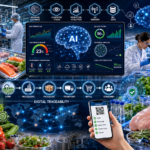
- Blockchain for food traceability
- Renewable energy in food production
At the same time, traditional knowledge, indigenous foods, and sustainable farming practices will remain essential for resilient food systems.
Final Thoughts
Food systems are much more than agriculture. They encompass every person, process, and resource involved in bringing food from the farm to our tables—and managing what happens afterward.
Every meal tells a story of farmers, processors, transporters, retailers, scientists, policymakers, and consumers working together in a complex network. By understanding food systems, we can make informed choices that improve nutrition, protect the environment, strengthen economies, and ensure that everyone has access to safe, healthy, and sustainable food.
The next time you enjoy a meal, remember: you are not just eating food—you are participating in a food system.
Key Takeaways
- A food system covers the entire journey of food from production to disposal.
- It includes production, processing, distribution, consumption, waste management, and governance.
- Food systems affect food security, nutrition, public health, the economy, and the environment.
- Safe and sustainable food systems are essential for achieving global food and nutrition security.
- Every individual—from farmers to consumers—plays a role in strengthening food systems.
References
- Food and Agriculture Organization of the United Nations (FAO). (2018). Sustainable Food Systems: Concept and Framework.
- Food and Agriculture Organization of the United Nations (FAO). (2023). The State of Food Security and Nutrition in the World.
- High Level Panel of Experts on Food Security and Nutrition (HLPE). (2017). Nutrition and Food Systems.
- United Nations. (2015). Transforming Our World: The 2030 Agenda for Sustainable Development.
- World Health Organization (WHO). (2021). Food Safety Strategy 2022–2030.